About Me
- LFN Textiles
- I am a studio artist and textile designer. My work swirls around among art, design, and the joy of making things. I founded LFN Textiles Artists Ribbons in 2002, and have been designing these fairly wonderful ribbons for 8 years now. They are distributed for the wholesale market exclusively by Renaissance Ribbons, and are available at retail on my website, www.lfntextiles.com, and nationwide through fine fabric stores, gift shops. My tapestries are available through a number of galleries across the country as well. See the links section for contact information.
Friday, June 1, 2012
Elegant Toiles
This spring we introduced a new line of LFNT Ribbons through Renaissance Ribbons, which are subtle and sophisticated. The two Camellias in ivory or pink satins are particularly great for bridal,
and there are a pair of useful rickrack designs in indigo/ivory or charcoal/ivory which are low key and elegant.
Then there are the two Toile designs, in black and ivory satin, which come from a favorite Auricula design I did a number of years ago -- as a tea towel for Crate & Barrel among other things.
There is a new version of Button Box in 7/8" width, in a charmingly vintage looking black & ivory.
Low key indeed! So the collection is rounded out by a snappy Suzani Flower on blue in 2 widths: 7/8" and 1.5", summery and colorful!
Labels:
LFN Textiles,
ribbon
I am a studio artist and textile designer. My work swirls around among art, design, and the joy of making things.
I founded LFN Textiles Artists Ribbons in 2002, and have been designing these fairly wonderful ribbons for 8 years now. They are distributed for the wholesale market exclusively by Renaissance Ribbons, and are available at retail on my website, www.lfntextiles.com, and nationwide through fine fabric stores, gift shops.
My tapestries are available through a number of galleries across the country as well. See the links section for contact information.
Monday, April 23, 2012
ribbons on pillows by Meryl Ann Butler
| Rickrack ribbon by LFN Textiles |
![]() |
| Morning Glory Ribbon by LFN Textiles |
| Pansy ribbon in red by LFN Textiles |
Labels:
publications,
quilting,
sewing,
Things to make with ribbon
I am a studio artist and textile designer. My work swirls around among art, design, and the joy of making things.
I founded LFN Textiles Artists Ribbons in 2002, and have been designing these fairly wonderful ribbons for 8 years now. They are distributed for the wholesale market exclusively by Renaissance Ribbons, and are available at retail on my website, www.lfntextiles.com, and nationwide through fine fabric stores, gift shops.
My tapestries are available through a number of galleries across the country as well. See the links section for contact information.
Thursday, April 12, 2012
mending
![]() |
| Shinique smith, Bale Variant 0011 |
One problem is that if anything gets snagged, or torn, or even just a bit worn, we tend to toss it as it is too much trouble to mend. I assembled a beautiful wardrobe from a very high end outlet store's "mercy rack" where exquisite garments which had a little seam rip or snag or missing button would be relegated: I often spent $10 on a garment that originally cost over $100. All because people can't, or won't, sew. And I was able to fix every flaw with great ease.
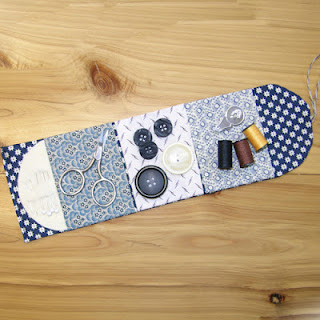
I have made little mending kits with button-printed tins and sewing items inside (I sell them here in Utopia and call them Utopian Mending kits: "How can you be a Utopian if you can't sew on a button?").
I have made sewing kit "Housewives" for the store at Monticello, based on the common sewing kits that everyone used to carry in their pocket. In the world wars, British soldiers carried them into battle and shortened the name to "hussif".
I have printed fabric with odes to sewing and do-it-yourself needle books, and have made historically inspired needle books based on the Harmonist textiles industry of 200 years ago.
I am so busy making these new things that I still haven't fixed the armholes of the dress I was making last week, or sewn the button back on my daughter's coat, or caught up the ravel in my favorite sweater.
At least I cook meals from scratch!
I am a studio artist and textile designer. My work swirls around among art, design, and the joy of making things.
I founded LFN Textiles Artists Ribbons in 2002, and have been designing these fairly wonderful ribbons for 8 years now. They are distributed for the wholesale market exclusively by Renaissance Ribbons, and are available at retail on my website, www.lfntextiles.com, and nationwide through fine fabric stores, gift shops.
My tapestries are available through a number of galleries across the country as well. See the links section for contact information.
now girls can have the same quilt their baby sisters have!
This spring, Land of Nod brought out my "How does your Garden Grow" (gotta love their copywriter!) quilt design in "kid" sizes, twin and full. It has been available up until now as crib bedding. Yay!
Labels:
Land of Nod designs,
quilts
I am a studio artist and textile designer. My work swirls around among art, design, and the joy of making things.
I founded LFN Textiles Artists Ribbons in 2002, and have been designing these fairly wonderful ribbons for 8 years now. They are distributed for the wholesale market exclusively by Renaissance Ribbons, and are available at retail on my website, www.lfntextiles.com, and nationwide through fine fabric stores, gift shops.
My tapestries are available through a number of galleries across the country as well. See the links section for contact information.
a cute chair pillow by Shelly Tribbey
Renaissance Ribbons sent me these photos yesterday of a darling pillow made by needlework designer Shelly Tribbey, using my Beidermeier Chairs ribbon and her fabulous needlepointed chair insert. Thanks so much for sharing these, Shelly!
I am a studio artist and textile designer. My work swirls around among art, design, and the joy of making things.
I founded LFN Textiles Artists Ribbons in 2002, and have been designing these fairly wonderful ribbons for 8 years now. They are distributed for the wholesale market exclusively by Renaissance Ribbons, and are available at retail on my website, www.lfntextiles.com, and nationwide through fine fabric stores, gift shops.
My tapestries are available through a number of galleries across the country as well. See the links section for contact information.
Wednesday, January 11, 2012
a new rug for Crate & Barrel
This morning my latest rug for Crate & Barrel went online. Fun to design, and a beautiful, deeply saturated wool pile rug. My last rug for them, Kincaid, was not such a burst of color as this one is. And it is always fun to step out of character -- from vegetables to geometric blocks! -- and make something different. The inspiration was Crate & Barrel's selected Pantone chart for the year.
Labels:
color,
Crate and Barrel designs,
textile design
I am a studio artist and textile designer. My work swirls around among art, design, and the joy of making things.
I founded LFN Textiles Artists Ribbons in 2002, and have been designing these fairly wonderful ribbons for 8 years now. They are distributed for the wholesale market exclusively by Renaissance Ribbons, and are available at retail on my website, www.lfntextiles.com, and nationwide through fine fabric stores, gift shops.
My tapestries are available through a number of galleries across the country as well. See the links section for contact information.
Monday, January 9, 2012
tableware for Monticello
In 1992, a gardening friend sent me a magazine article about the restoration of Thomas Jefferson's vegetable garden at Monticello which totally focused my work for many years afterward.
If you don't know this garden, you might be interested to hear that Thomas Jefferson, in addition to being the principal author of the Declaration of Independence and our nation's third president, was an avid gardener and researched and wrote extensively about farming and gardening as an American activity. He used his vegetable gardens for research, growing, for example, fifteen different varieties of the English pea, his favorite vegetable.
The vegetable garden itself lay across the flat top of Monticello mountain in long ribbon -- 80 feet by 1000 feet -- patterned with row after horizontal row of varying vegetables, up to 80 varieties of vegetables, herbs, and edible flowers per season. In, I might add, the extraordinarily beautiful landscape of the mountains of Charlottesville, Virginia.
I am not much of a historian: That's just about enough of the story for me, right there. As an artist, I was thrilled by the visual, by what I saw as a textile opportunity in the ribbon and the pattern, by the simpler story of a learned man who loved, above all, to grow vegetables, and so off I went! I visited the garden as soon as I could get there, sketchbook and camera in hand, and was soon interviewing the gardeners, being taken to the head of the gardens -- a scholar and plantsman named Peter Hatch -- and shown the greenhouses, the tool sheds, anything I wanted to see.
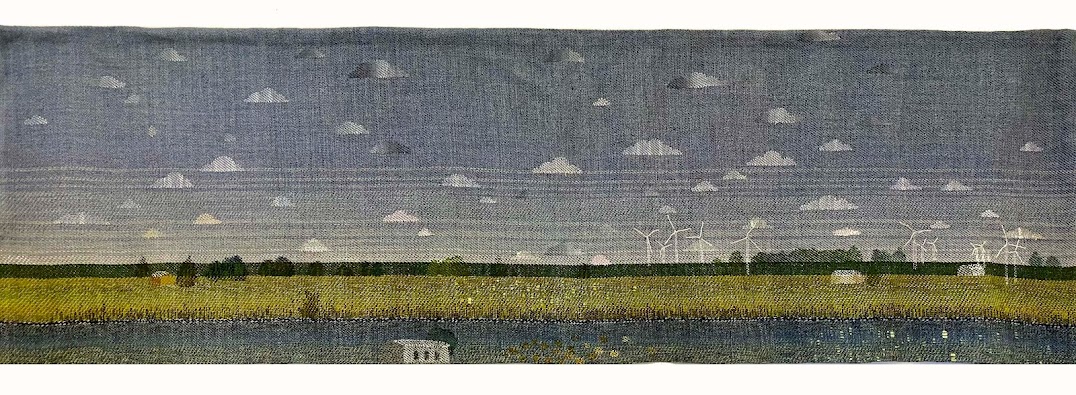
I wove a set of tapestries about that garden which I named the Thousand Foot Garden. The centerpiece was a set of 68 different woven panels of most of the vegetables growing there during the season in which I visited -- they had kindly shared their planting diagrams for summer 1992. I also made an elevation of the garden, a bird's eye view plan, and a number of pieces describing the potting sheds, the tools, etc -- in other words, the process of making the garden.
This particular piece, Harvest 1992, proved a seminal piece of work for me. It involved researching and drawing many differnet varieties of plants, but more importantly, figuring out how to weave things like santolina, or lavender. The root vegetables were straightforward by comparison, but I had developed a rationale for how I would "draw", row by row on the loom, and had to figure out how to incorporate all of these new types of form in my woven language.
Eventually when I began my ribbon business, for which this blog is named, one of the first few ribbons I designed was vegetables. Given the expense of designing very long repeats (the economy of weaving my ribbons was in the length of the repeat, if you can believe it, as I was charged for the number of repetitions of the design unit. If it was a 9" repeat, it would be much more expensive to purchase 5000 repeats of that than if it were a 2" repeat, where I might be ordering 15,000 repeats --do the math on that to convert it to yardage! Hence I had to choose a very few vegetables to represent it all). I would have loved to make the ribbon with a 160" repeat -- it is possible but has anyone done it? That is why I call my company LFN Textiles: Artist's Ribbons, because the artist in me is drawn to challenges like this!
This was - and still is - a popular ribbon, and I was able to convince the small gift shop at Monticello to begin carrying such a peculiarly un-touristy item as ribbon, because of it s strong relationship to the place.
A number of years later, in the recent past, Monticello built a grand new Visitor's center farther down the mountain, which has a good cafe, theater, museum and a vastly improved shop. Since I had been licensing my designs for a few years to Crate & Barrel, and they had loved the vegetable motifs, I persuaded the buyer to license a fresh version of the design - in fact, the design which forms the header of this blog! -- for use on products, to bring a fresh look at the history. And the new products are now available in their spring catalogue, as well as in the shop in Charlottesville. Naturally, they went on table ware!
And of course, here is the new version of the design as a ribbon!
If you don't know this garden, you might be interested to hear that Thomas Jefferson, in addition to being the principal author of the Declaration of Independence and our nation's third president, was an avid gardener and researched and wrote extensively about farming and gardening as an American activity. He used his vegetable gardens for research, growing, for example, fifteen different varieties of the English pea, his favorite vegetable.
The vegetable garden itself lay across the flat top of Monticello mountain in long ribbon -- 80 feet by 1000 feet -- patterned with row after horizontal row of varying vegetables, up to 80 varieties of vegetables, herbs, and edible flowers per season. In, I might add, the extraordinarily beautiful landscape of the mountains of Charlottesville, Virginia.
I am not much of a historian: That's just about enough of the story for me, right there. As an artist, I was thrilled by the visual, by what I saw as a textile opportunity in the ribbon and the pattern, by the simpler story of a learned man who loved, above all, to grow vegetables, and so off I went! I visited the garden as soon as I could get there, sketchbook and camera in hand, and was soon interviewing the gardeners, being taken to the head of the gardens -- a scholar and plantsman named Peter Hatch -- and shown the greenhouses, the tool sheds, anything I wanted to see.
I wove a set of tapestries about that garden which I named the Thousand Foot Garden. The centerpiece was a set of 68 different woven panels of most of the vegetables growing there during the season in which I visited -- they had kindly shared their planting diagrams for summer 1992. I also made an elevation of the garden, a bird's eye view plan, and a number of pieces describing the potting sheds, the tools, etc -- in other words, the process of making the garden.
This particular piece, Harvest 1992, proved a seminal piece of work for me. It involved researching and drawing many differnet varieties of plants, but more importantly, figuring out how to weave things like santolina, or lavender. The root vegetables were straightforward by comparison, but I had developed a rationale for how I would "draw", row by row on the loom, and had to figure out how to incorporate all of these new types of form in my woven language.
Eventually when I began my ribbon business, for which this blog is named, one of the first few ribbons I designed was vegetables. Given the expense of designing very long repeats (the economy of weaving my ribbons was in the length of the repeat, if you can believe it, as I was charged for the number of repetitions of the design unit. If it was a 9" repeat, it would be much more expensive to purchase 5000 repeats of that than if it were a 2" repeat, where I might be ordering 15,000 repeats --do the math on that to convert it to yardage! Hence I had to choose a very few vegetables to represent it all). I would have loved to make the ribbon with a 160" repeat -- it is possible but has anyone done it? That is why I call my company LFN Textiles: Artist's Ribbons, because the artist in me is drawn to challenges like this!
This was - and still is - a popular ribbon, and I was able to convince the small gift shop at Monticello to begin carrying such a peculiarly un-touristy item as ribbon, because of it s strong relationship to the place.
A number of years later, in the recent past, Monticello built a grand new Visitor's center farther down the mountain, which has a good cafe, theater, museum and a vastly improved shop. Since I had been licensing my designs for a few years to Crate & Barrel, and they had loved the vegetable motifs, I persuaded the buyer to license a fresh version of the design - in fact, the design which forms the header of this blog! -- for use on products, to bring a fresh look at the history. And the new products are now available in their spring catalogue, as well as in the shop in Charlottesville. Naturally, they went on table ware!
And of course, here is the new version of the design as a ribbon!
Labels:
Monticello,
ribbon,
textile design,
weaving
I am a studio artist and textile designer. My work swirls around among art, design, and the joy of making things.
I founded LFN Textiles Artists Ribbons in 2002, and have been designing these fairly wonderful ribbons for 8 years now. They are distributed for the wholesale market exclusively by Renaissance Ribbons, and are available at retail on my website, www.lfntextiles.com, and nationwide through fine fabric stores, gift shops.
My tapestries are available through a number of galleries across the country as well. See the links section for contact information.
Subscribe to:
Posts (Atom)